Build the brief around the buyer’s use case
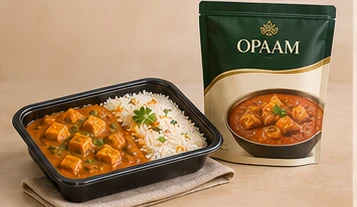
Heat-and-eat foods can serve a defined role in an international food portfolio when product expectations are clear from the outset. OPAAM Foods positions its India-based manufacturing network for retail, institutional, foodservice and private-label supply. This guide is written for HORECA and restaurant supply buyers evaluating heat-and-eat foods for USA and Canada.
A commercial brief for operators evaluating ready-to-heat products for repeatable kitchen workflows.
For this category, buyers should describe the target customer and channel, required product style, ingredient and sensory expectations, pack size, case configuration and destination market. The production strengths described across India include Maharashtra and Tamil Nadu for ready-to-eat foods and soups, with Gujarat contributing complementary condiments. Regional specialization and seasonal sourcing can support planning, raw-material access and continuity; actual origin, facility, capacity and order terms should be confirmed against the product and purchase plan.
Packaging should be discussed as part of the product brief. Retail packs, foodservice packs, bulk formats and private-label presentation have different handling needs. Buyers can align export-ready, long-shelf-life packaging logic with moisture-conscious protection, transit-safe handling and a carton-planned shipment configuration. Multilingual labels, barcode-ready layouts and compliance-ready declarations should be reviewed against the target market before print approval.
Trade readiness can include APEDA registration where applicable, export documentation coordination and FDA-aligned expectations for relevant US-bound products. Applicability depends on product, facility and destination; confirm it case by case.
A practical enquiry should include product and market, desired pack, indicative volume, target launch or shipment window, private-label needs and the buyer’s documentation checklist. OPAAM Foods can discuss custom recipe or formulation flexibility, flavour balancing or market adaptation, MOQ-based scalable production, retail or foodservice packs, multilingual packaging support and longer-term OEM or white-label supply, subject to product feasibility and agreed specifications.
Procurement points to confirm
- Product specification and intended channel, including retail, institutional or foodservice use.
- Destination-market requirements, label language, declarations and import documentation.
- Retail, foodservice, bulk or private-label pack format, with carton and shipment assumptions.
- Indicative volume, MOQ, forecast horizon, approval milestones and requested delivery window.
Frequently asked questions
What should a buyer share for a heat-and-eat foods enquiry?
Share destination market, intended channel, product brief, pack format, indicative volume, timing and any private-label or documentation requirements.
Can this be developed for a private label?
Private-label and OEM discussions can cover recipe or formulation options, flavour adaptation, pack selection and label coordination. Scope, MOQ and feasibility are confirmed for each product.
Which certifications or documents should be checked?
Ask for the applicable facility and product documentation for the order and destination. Verify scope, validity and market relevance directly; requirements vary by product and country.
Targeted sourcing keywords
Contact OPAAM Foods, Mumbai
Email: info@opaam.com
Website: www.opaam.com
Phone: +91 9821004364